Tag: Design for Emotions

  • TEN: 10 years of Design & Emotion (Workshop Part II)

    TEN workshopA while back I wrote about the workshop organized by the Design & Emotion Society to celebrate their ten year anniversary, and I said I would make a second post explaining the rest of the workshop and the results… well, after finally making some time to sit down and go through it, here it is!

    If you haven’t read the first part, I suggest you do so here, because that will make the coming lines much more clear to understand.

    so, here it goes…. (more…)

  • Differentiating emotional hotel experiences (EuroCHRIE 2009)

    EuroCHRIE 2009I’m finally back home after attending the EuroCHRIE 2009 conference in Helsinki for a few days, and I have to say that it was quite an interesting experience for me, since it was not really in my professional field as a designer, but it did have to do with what I’ve been working on for the past few months first as part of my MSc. graduation project and now as an interaction designer/researcher for SusaGroup.

    The conference dealt with experiences in the hospitality and tourism industry and I was actually there presenting a working paper which came from a small exploratory study I conducted at the early stages of my graduation project with the aim to identify what type of emotions people felt the most in a hotel environment and towards what exactly. (more…)

  • Panoremo: A tool to assess the emotional experience of environments

    Panoremo_thumb

    Relevant Keywords:

    Evaluating emotions, environments, services, consumer experience, online application, prototyping

    Design Goal:

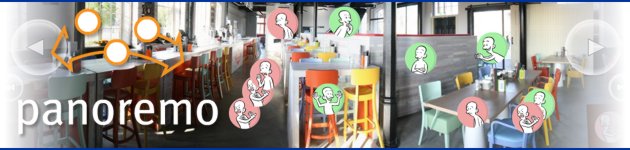
    During my Design for Interaction MSc. graduation project a concept was developed that was deemed very interesting and promising for the potential assessment of emotions experienced towards a physical environment. This concept was later developed even further in collaboration with SusaGroup in order to bring it into the market as a fully functional instrument that can aid in emotional design research.

    Methods Used:

    • Early prototyping to perform user testing of working principle.
    • Software development.
    • Usability testing.

    (more…)

  • TEN: 10 years of Design & Emotion (Workshop Part I)

    TEN workshopThe Design & Emotion Society is celebrating this year their 10th anniversary and they decided to organize an event at the Delft University of Technology to commemorate this milestone.

    “TEN – 10 years of design and emotion” was a one day workshop held at the faculty of Industrial Design Engineering on the 28th of August and luckily I was there to participate. In this post I’ll explain what the workshop was all about and I’ll give a brief explanation of what we did in the first half of the activity. In a later post, I’ll show some of the results that were obtained at the end of the day. (more…)

  • Measuring and evaluating emotions towards physical spaces

    emotional_space1Well, it’s kind’a cool at the deep end of the pool. Two months into my current status as a Master of Science I’m having lots of fun working on a temporary basis (let’s hope that changes soon) with the good people at Susa Group, the company that I worked for during my graduation project.

    And it’s lots of fun because I’m doing something which I really enjoy, and we are working on transforming one of the concepts I developed during graduation into a fully working and marketable tool which hopefully people will be using in a very, very near future.

    It’s still a work in progress, but the idea is to develop a tool that can help in measuring and evaluating emotions towards  physical spaces. This opens up the door to a plethora of possibilities and applications: evaluating an urban environment to know how people feel about their surroundings (emotions in architecture and urbanism), finding out how people feel about that new interior design that you are developing for a new store (emotions in retail design) or identifying the critical emotional points of a restaurant or of a hotel lobby (emotions in experiential services) are but a few of the examples I can think of. (more…)

  • Developing a tool to assess emotions elicited by services – MSc. graduation presentation (Video & Pics)

    [iframe src=”//player.vimeo.com/video/12315079?byline=0″ width=”630″ height=”394″ frameborder=”0″ webkitallowfullscreen mozallowfullscreen allowfullscreen]

    So… it’s been a little over a week since I did the presentation for my Design for Interaction MSc. graduation project (Developing a tool to assess emotions elicited by services), and since I went off on a short one week vacation right after that, I didn’t have the time to post the video and some photos of the presentation during that time.

    But as I promised some people, today I finally got back and had some spare time to upload everything. So above,you can take a look at the video of the presentation (takes about 45 minutes including the questions round). The file is quite big (around 500 Mb) because I couldn’t (more…)

  • Developing a tool to assess emotions elicited by services

    graduation-presentation-david-guiza-caicedoHi everyone!

    well, it’s almost here… on the 26th of June I will be giving the presentation for my Design for Interaction MSc. graduation project and I’d like to invite anyone interested in the subject to come along to the presentation.

    It will be held at 3:45 pm at the faculty of Mechanical, Maritime & Materials Engineering (Mekelweg 2, 2628 CD Delft) of the TU Delft, in Room F.

    In the mean time, wish me luck finishing up the project!

  • Ready, set, GREEN!

    green_lanternLast Thursday I finally received the green light from my graduation supervisory team, which in fact means that they are confident that I will be able to finish up my MSc. graduation project within the coming 6 weeks and that no matter what, on the 26th of June somewhere in the afternoon, I will finally be leaving my eternal student status behind to officially adopt my new role as a jobless professional with a Master’s degree (albeit, hopefully for not too long).

    So anyway, if there are people out there in the Netherlands (or the vicinity) who are interested in the project (“Developing a tool to assess emotions elicited by services”), I will be performing a public presentation of the project on the 26th of June, at the Delft Univeristy of Technology. More details regarding location and time will come shortly.

  • Experiential Services: My two cents to understanding them

    sb10069519ag-001I’ve been so busy with my MSc. graduation project that I left this blog completely unattended. Today, I decided that it was time to do something about that, and what better way than to post something related to the project itself.

    My project is titled “Developing a tool to assess emotions elicited by services”, and as such I figured that the first step on the road was to do a bit of research and try to find out what exactly was meant by services, and more especifically experiential services.

    But what the hell are experiential services??? well, here are my two cents to try and understand this concept better.

    First of all, a little background info:

    A shift towards an “experience” economy

    For centuries, the agrarian economy was based on Commodities (products grown, or extracted from the land), but in the wake of the industrial revolution Goods (manufactured or processed products) became the predominant (more…)

  • Designing the new prEmo – An empirical research on how to improve the emotion measuring tool

    premo2A while back I was working together with Pieter Desmet, an associate professor at the Industrial Design faculty of the TU Delft, in a project aiming to improve prEmo, a tool to measure emotions towards products.

    The tool proved to be very effective, but it still had some points to it that could be enhanced, so that’s why we started working on a newer version of it.

    For anyone interested in this kind of studies, you can download a copy of the final document that I wrote reporting on the steps that were followed, the methodologies used, and of course the results from our study.

    You can download a copy by clicking on the link below:

    PDF: designing-the-new-premo-david-guiza-caicedo-2009.pdf

  • So what do you feel in a hotel???

    hotel_surveyI haven’t published much lately, due mostly to the fact that I started with my graduation project. But OK, it was time to get back on this, and what a better way than to ask for help with the project itself!

    For my MSc. Graduation project, I’m conducting a small study regarding the emotions you experience while in a hotel, and I’d like to ask your help remembering some of the times that you have stayed in a hotel and tell me some of the things you’ve experienced by using the following online survey:
    www.bluehaired.com/hotel_survey

    It can take as little as 5 minutes to help a bit and I will really appreciate your time and effort.

    If you have any questions or comments regarding the study or what I will do with its results, I’ll be glad to answer any doubts, so just drop me a line.

    And if you are curious as to exactly what I’m doing with my project, you can take a look at my proposal which is in the PDF below.

    [UPDATE: you can now actually find the results and a scientific paper regarding the study HERE]

    PDF:

  • PrEmo: a tool to measure emotional responses

    PrEmo is a tool to measure emotional responses towards products, originally developed by Pieter Desmet at the faculty of Industrial Design Engineering at the TU Delft. It uses animated characters to portray a certain number of emotions, which a person can use to describe in a non verbal way the kind of emotions that he feels towards a product.

    I had the chance to work in a research project in the past in which I compared this tool to a more semantic tool (the Geneva Emotions Wheel) which gave us some very good insights into how this tool could be enhanced. Together with Pieter Desmet, it was decided that a follow up project was needed in order to make a newer version of the tool with the findings of the first study as a basis.

    I you are interested in helping out with this study, please visit www.bluehaired.com/premo and fillin our questionnaire. Here you willbe able to see the evolution of the original tool and give us some feedback about it.

    And of course, if you are interested in the results or the study in general, you can always drop me a line and I’ll be happy to give you more information.

  • Assesment of existing tools for the measurement of emotions and their application in consumer products research

    A while back, and as part of my bachelor for Industrial Design Engineering at the TU Delft, we performed a research project in which we took a deeper look into the world of measuring emotional responses, and reported our proceedings and findings in a scientific paper. We also performed a field test with two of the most promising tools that we identified in order to have a better understanding of how they work and how they could be improved. These tools are PrEmo (developed at the TU Delft) and the Geneva Emotions Wheel (developed by the Geneva Emotion Research Group)

    If you are interested in this field I highly recommend you take a look at it.

    Here’s the abstract:

    “This paper introduces the subject of emotions in consumer products research; what are they, how to define them and most importantly, how to quantify and qualify them. A brief background research is made to clarify the concepts involved and to identify existing tools to measure emotions. Furthermore, a small field research was performed to test the validity that two of the most promising tools have on the field of consumer products research.”

    To download a PDF version of the study’s report or the poster, click in the links bellow.

    LINK 1: Assessment of existing tools for the measurement of emotions (PDF)

    LINK 2: Poster (PDF)