Tag: Prototyping

  • Accenture Digital Hackathon 2016

    AccentureDigiHack

    Last weekend I took part of Accenture’s Digital Hackathon, a global event organised by Accenture (Duh!) in which more than 400 participants from 8 cities around the globe would try to think of and complete a project within 24 hours under the umbrella theme of “Connect. Collaborate. Create”.

    It was my first time at a hackathon and although it required a lot of energy and very little sleep, it was lots of fun and quite an experience with very interesting results from all the talented people who participated. (more…)

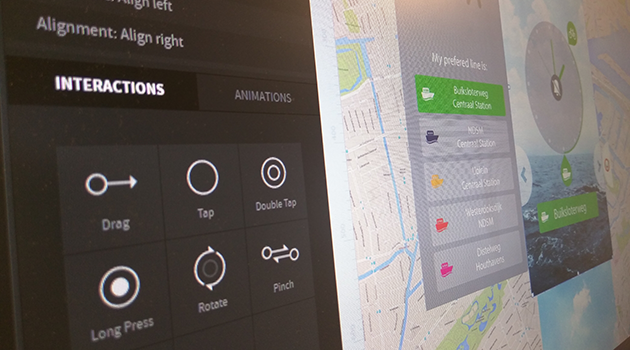
  • Easy mobile prototyping with Pixate

    I’ve been looking recently into playing a little bit more with new tools meant for digital designers like myself. Don’t get me wrong, I am perfectly happy with my Illustrator/Visio/Flash combo for all my UI/Workflows/Prototyping needs, but I figured it’s always good to keep your eyes open for new toys. So long story short, while browsing through Google’s Design Blog I came across Pixate (since apparently they were recently acquired by Google) a fairly new prototyping tool for mobile (Android and iOS) which seemed worth a try.

    (more…)

  • Designing the new touch interface language

    Last Tuesday I attended a short presentation at the Delft University of Technology, where Kay Hofmeester (former UX manager for Microsoft Surface) told us a bit about how the Surface team tried to handle the new challenges posed by designing user interfaces under the new touch interface paradigm. I took the liberty to record it to share it with whoever is interested (Kay if you’re out there reading this, I hope you don’t mind ;-)).

    It was a very interesting lecture with some nice and concrete examples of how wrong it is to try to directly translate old user interfaces for new input devices such as touch screens.

    The Spanish speaking pointer and the Italian speaking finger

    In the lecture, Kay explains very nicely and in depth some of the main practical differences between interacting with a classical GUI and with a touch interface, but I’m gonna give it a go with my own metaphor.

    Think of the following scenario. You’ve been speaking Spanish all your life. You know the ins and outs of your language. One day you move to Italy and all of a sudden you find yourself surrounded by Italians. Sure! your Spanish might help you get by to a certain level due to the language similarities, and you (more…)

  • RepRap: Be fruitful and multiply!

    “And God blessed them, and God said unto them, Be fruitful, and  multiply, and replenish the earth, and subdue it: and have dominion over  the fish of the sea, and over the fowl of the air, and over every living  thing that moveth upon the earth”

    Genesis 1:28

    I’m not a religious person at all, but this quote from Genesis illustrates very nicely the awesome powers that were bestowed by “the dude upstairs” upon that couple of naked people living in his garden: Usefulness and Self reproduction!

    This gave way to the opportunity to get more of these  naked people to walk around, do some cool things which could help themselves and others and eventually create some more naked people of their own to keep the ball rolling.

    Well this amazing power is exactly what the guys behind the RepRap project gave to their open source rapid prototyping machine. That’s right, it’s a SELF REPLICATING RAPID PROTOTYPING MACHINE! it creates useful things for us and has the ability to create a copy of itself so that others can take advantage of it too. How awesome is that?? (more…)

  • God! you gotta love Delft

    DDEAThere’s a reason why Delft is ranked as the 15th best engineering university in the world, and god, you gotta love them for that!

    In Australia, only a crash 3 weeks before the start of the race managed to keep Nuna 5 from being the top dog of the World Solar Challenge so far… After a speedy crash recovery operation, we’re still third by the second day of racing and breathing down the neck of second placed University of Michigan. But watch out Tokai University (leaders so far) ’cause the Nuna team went to Australia to claim their rightful place and beat the competition for the 5th time in a row.

    [UPDATE: As of October 27th, Nuna 5 has already surpassed the car from the University of Michigan, so Tokai is next!]

    And back in Delft, the Design and Engineering Award is underway with some very, VERY interesting stuff going on.

    On this post, you can find a couple of my favourite videos of some of the participating projects from our different faculties, which are just to show off a bit of why Delft is soooo cool 😉 (more…)

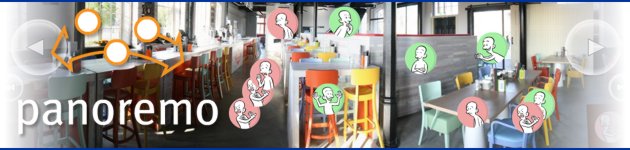
  • Panoremo: A tool to assess the emotional experience of environments

    Panoremo_thumb

    Relevant Keywords:

    Evaluating emotions, environments, services, consumer experience, online application, prototyping

    Design Goal:

    During my Design for Interaction MSc. graduation project a concept was developed that was deemed very interesting and promising for the potential assessment of emotions experienced towards a physical environment. This concept was later developed even further in collaboration with SusaGroup in order to bring it into the market as a fully functional instrument that can aid in emotional design research.

    Methods Used:

    • Early prototyping to perform user testing of working principle.
    • Software development.
    • Usability testing.

    (more…)

  • emoments: Developing a tool to assess emotions elicited by services

    emoments_thumb

    Relevant Keywords:

    MSc. Graduation project, evaluating emotions, services, consumer experience, hotels, mobile application, prototyping

    Design Goal:

    Various methods are available for measuring emotional responses elicited by products (design) or human-product interaction. Up to this point however, no instrument was available that could be used to assess emotional service experiences. The aim of the project was to extend the possibilities of assessing emotions to the realm of experiential service design. As a case study for the project, the focus was laid on the `hotel experience’, that is, the experience of a guest while staying at a hotel.

    Project duration:

    5 months (full time)

    Methods Used:

    • Thorough literature research to become acquainted with the project domain.
    • Online survey to identify the most common types of emotions experienced by hotel guests and the stimuli associated with these experiences.
    • Creative session organized with a panel of users and designers to generate ideas.
    • Early prototyping to perform user testing of concepts.
    • Creation of wire-frames and navigation flow-charts to define the software’s architecture.
    • Hi-Fi prototyping of final concept.
    • Usability testing.

    (more…)

  • Developing a tool to assess emotions elicited by services – MSc. graduation presentation (Video & Pics)

    [iframe src=”//player.vimeo.com/video/12315079?byline=0″ width=”630″ height=”394″ frameborder=”0″ webkitallowfullscreen mozallowfullscreen allowfullscreen]

    So… it’s been a little over a week since I did the presentation for my Design for Interaction MSc. graduation project (Developing a tool to assess emotions elicited by services), and since I went off on a short one week vacation right after that, I didn’t have the time to post the video and some photos of the presentation during that time.

    But as I promised some people, today I finally got back and had some spare time to upload everything. So above,you can take a look at the video of the presentation (takes about 45 minutes including the questions round). The file is quite big (around 500 Mb) because I couldn’t (more…)

  • Developing a tool to assess emotions elicited by services

    graduation-presentation-david-guiza-caicedoHi everyone!

    well, it’s almost here… on the 26th of June I will be giving the presentation for my Design for Interaction MSc. graduation project and I’d like to invite anyone interested in the subject to come along to the presentation.

    It will be held at 3:45 pm at the faculty of Mechanical, Maritime & Materials Engineering (Mekelweg 2, 2628 CD Delft) of the TU Delft, in Room F.

    In the mean time, wish me luck finishing up the project!

  • The wonderful Wizard of Oz… Prototype

    wizard-of-ozI’ve talked before about the Virtual Goals project that I worked on a few months back, and in this post I’d like to talk a bit more about one of the techniques that we used during the project: Wizard of Oz prototyping

    This technique (named of course after the famous book by L. Frank Baum) is in my opinion one of the most powerful ways of experimenting and developing user interfaces dealing with smart systems, because it allows you to test even when there is no smart system to start with!

    The idea is fairly simple:  you make a prototype in which all of the actions which will eventually be attributed to the computer system are actually performed by a person.

    Let’s illustrate with an example; let’s say you want to make a system that recognizes (more…)

  • Low-Fi prototyping: Cheap & easy, but damn good!

    Prototyping is an iterative process that allows you to test, evaluate and implement changes to your design during the developing process before arriving to a final solution, and experiential prototyping is no exception to this. The designer is thus encouraged to produce and test prototypes along the whole development process. But since prototyping can be very effort and time consuming, it is important to know what type of prototyping techniques are more appropiate at different stages.

    The concept of prototype “fidelity” is defined by the level of detail used in making it, and dus how closely does the prototype resembles the “real thing”. For example, in software and graphical user interface design, low-fi prototyping can be achieved with simple tools such as paper and colored pencils, with which a quick and dirty sketch of an interface can be drawn on different sheets of paper and be tested (and most importantly fixed) on the run before any code is written at all, and it allows people from other disciplines to be able to collaborate.

    low fidelity prototyping also adds the extra advantage of a quick and unfinished “look”, which will (more…)

  • VirtualGoals: enhancing the playability of football through the use of interactive technologies

    Johan Cruyff foundationRelevant Keywords:

    Football, interactive technology, prototyping, user testing, wizard of oz.

    Design Goal:

    At playgrounds, the sport courts are very popular and are used intensively for playing football. It is however strange that these sport courts are hardly used by girls, despite the strong growth in the popularity of girl football in the last few years. Our design goal was to develop an interactive installation for sport courts and in particular the Cruyff courts. By adding interactive technology to the game of football we want to enhance the playability of the playgrounds.

    Project duration and team:

    120 hours, 3 interaction designers (David Güiza Caicedo, Nouschka Tijdeman, Ferdinand van Oostrom)

    Methods used:

    • Experiential prototyping
    • Wizard of Oz prototyping
    • Mid-Fi prototyping
    • User testing

    (more…)

  • Virtual Goals: Technology in the Cruyff Courts

    So, this is the final paper that we wrote regarding our Virtual Goals project. It’s quite interesting to take a look at it to follow the full story of how we developed the concept and how we tested it with various prototyping techniques.

    Here’s the abstract:
    “The Cruyff courts are very popular outdoor, public sports facilities in The Netherlands, but unfortunately they are not as attractive to girls as they do not like playing with boys. In this paper we describe our attempt to apply new technology into these fields in order to attract girls to them without making them less attractive for boys. Various experiential prototypes were built to test our proposals.”

    To read the full paper click on the link below:

    LINK : Virtual Goals: Technology in the Cruyff Courts (PDF)

  • ipNext: Usability testing and redesign of an office phone

    ipNext_thumb

    Relevant Keywords:

    Telecommunications, office environment, user research, usability testing, icon validity testing, redesign, office telephone

    Design Goal:

    The goal of this project was to evaluate the usability of the Alcatel-Lucent IP Touch 4018 office phone and to propose a re-design of the phone according to the findings of the performed tests. The team consisted of 6 Design for Interaction master students of the TU Delft working directly for Alcatel-Lucent, a global telecommunications corporation.

    Project duration and team:

    225 hours, 6 interaction designers (David Güiza Caicedo, Tine Lavrysen, Amine Rhord, Meike Mak, Steven Fokkinga, Marjolein Hartog)

    Methods Used:

    • Product analysis in terms of aesthetics and functionality
    • Online user survey & interviews with experienced users to understand how they perceived the current phone.
    • Usability tests of the current phone with novice and experienced users.
    • Online icon validity test performed with an international sample of people.
    • Interaction prototyping to assess the new interaction model proposed with the redesigned phone.

    (more…)

  • DreamWhipper: Complete product development of a hand powered cream whipper

    DreamWhipper_thumb

    Relevant Keywords:

    Product development, household, manufacturing, technical research, technical development, prototyping

    Design Goal:

    As part of a design exercise at the TU Delft, we were given the task to use a 1928 patent of a cream whipper as a starting point for our design case. We were to use the patent as much as we could and translate the design of the cream whipper into our days in terms of production, assembly, materials, styling and features.

    Project duration and team:

    250 hours, 6 industrial design engineers (David Güiza Caicedo, Wouter Drost, Roos van Rhijn, Erik Jansen, Marie-Louise Brantjes)

    Methods Used:

    • Product analysis
    • Technical research
    • Brain writing
    • lo-fi prototyping
    • 3D modeling and Rapid prototyping
    • User testing

    (more…)

  • Gothic Clock: Free formgiving exercise

    GothicClock_thumb

    Relevant Keywords:TU Delft Logo

    Goth lifestyle, wall clock, free form-giving exercise, clay modeling

    Design Goal:

    As part of a free design exercise at the TU Delft we were asked to research a specific lifestyle (goths in my case) and to design a daily use product that would fit the form language of the given lifestyle.

    Project duration:

    75 hours

    Methods Used:

    • Interviews
    • Sketching
    • Clay modeling

    (more…)