Tag: Product Analysis

  • So… what IS design for interaction anyways?

    I’ve been meaning to make a post here about what we define as “Design for Interaction” at the TU Delft, but since I just came across this video, my life was made soooo much easier, because they explain it beautifully. So, there, for anyone wondering what exactly it is that I and my fellow DfI’ers do, here’s a perfect explanation 🙂

    Thanks to Niels van Hamersveld and Pieter Desmet for the great work producing the animation.

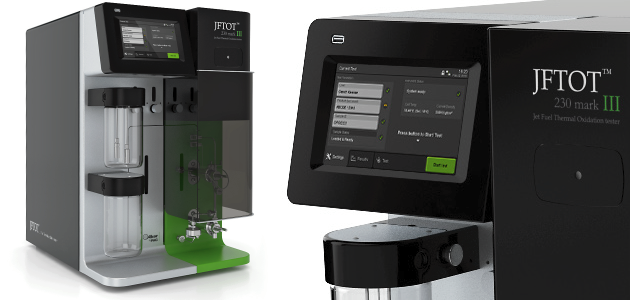
  • JFTOT: User experience design for a family of industrial lab equipment

    PAC

    Relevant keywords

    Laboratory instruments, User interface harmonization, GIO Award 2013, American Good Design Award 2013

    Design goal

    PAC commissioned VanBerlo with the task of performing a portfolio-wide harmonization of their user interfaces, based on the design and styling developed during a previous project. This harmonization was to be started with the design of JFTOT, the newest addition to their growing family of industrial lab equipment.

    Specific role & contribution

    • Project planning and management, including preparation of quotes and direct communication with client
    • On-site visits and direct communication with developers
    • Initial analysis of the benefits of a UI harmonization
    • Conceptualization and wire-framing for JFTOT’s UI
    GIO2013GoodDesign

    (more…)

  • Langen: Creating UX guidelines for industrial packaging machines

    Relevant keywords

    Industrial machinery, User interface guidelines, Packaging

    Design goal

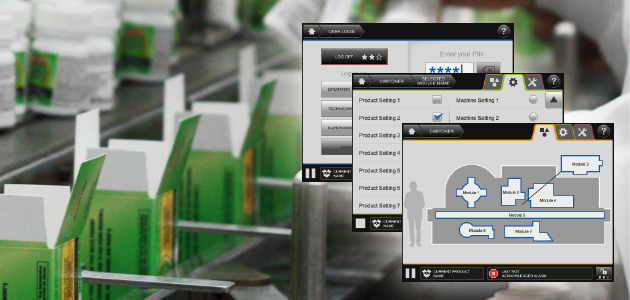
    In an effort to bring together the user interface developments of both its European and American branches, Langen Group commissioned VanBerlo to develop a new set of harmonized UI guidelines for its products.

    Specific role & contribution

    • Project planning and management, including preparation of quotes and direct communication with client
    • Organized on-site visits and workshops with the client for an in-depth analysis of the product
    • Responsible for all conceptualization and styling activities
    • Direct communication with developers and support during production phase

    (more…)

  • Cradle to Cradle: Hype or hope?

    c2cI’ve been meaning to make a post about Cradle to Cradle (C2C) for a while and last week we had a mini-symposium about it at the TU Delft with the attendance of Michael Braungart, one of the original C2C advocates, so I figured that this was the perfect excuse to get down to it.
    So, to get started, let’s explain the C2C concept a little bit, and the best way to explain Cradle to Cradle is to first explain what Cradle to Grave means.

    Until not so long ago, our production paradigm was focused on manufacturing products as cheaply as possible which would be later discarded into landfills (in the worst case) or burned up for energy (in the best case), meaning that we were producing or processing materials (cradle) which would later be rendered useless because they were being buried or destroyed (grave) (more…)

  • Personal Area Libraries (PALs): Books and Libraries of the future

    [iframe src=”//player.vimeo.com/video/11309766?byline=0″ width=”630″ height=”473″ frameborder=”0″ webkitallowfullscreen mozallowfullscreen allowfullscreen]

    As part of a project for the TU Delft and together with my good friends Job Greefhorst and Amine Rhord, we set out to design the books and libraries of the future. We followed some context mapping techniques to understand the domain of reading in general as a first step for our process. I will explain the process in a later post, as it was quite interesting and it will give me a chance to explain some of these context mapping techniques in greater detail, but in the mean time, I’ll just stick to the results of our research which are more than plenty for a single post, and of course I will show you one of the two concepts that we came up with (the other one will also come on a later post).

    So let’s get started…

    THE READING DOMAIN CONTEXT

    We wanted to know what people thought of their books, how they stored them, why they liked them, why they (more…)

  • Designing the new prEmo – An empirical research on how to improve the emotion measuring tool

    premo2A while back I was working together with Pieter Desmet, an associate professor at the Industrial Design faculty of the TU Delft, in a project aiming to improve prEmo, a tool to measure emotions towards products.

    The tool proved to be very effective, but it still had some points to it that could be enhanced, so that’s why we started working on a newer version of it.

    For anyone interested in this kind of studies, you can download a copy of the final document that I wrote reporting on the steps that were followed, the methodologies used, and of course the results from our study.

    You can download a copy by clicking on the link below:

    PDF: designing-the-new-premo-david-guiza-caicedo-2009.pdf

  • From A to Green: A future vision of sustainable coachworks

    g-combi_thumb

    Relevant Keywords:

    Automotive industry, sustainability, Transportation, Delivery, Coachworks, Future scenario

    Design Goal:

    Combigroep Carrosserieën, a Dutch coachworks producer, wants to extend its potential market following the newest regulations, transportation trends and logistics of the European Union having sustainability as a focus. As a group of 6 interdisciplinary designers the project was carried out from the strategy up to the product interaction and product detail level.

    Project duration and team:

    300 hours, 2 Strategic product designers (Stefanus Heru Prabowo, Ricardo Mejia), 3 Integral product designers (Barth Vrijling, Ana Laura Rodrigues Santos, Marjolein van Houten), 1 Interaction designer (David Güiza Caicedo).

    Methods Used:

    • Vision in Product Design (ViP) was used as a design framework throughout the whole project
    • The context of the industry and our clients position within it was researched and analyzed through stakeholder analysis, competitor analysis and PESTE analysis
    • Interviews and role playing user analysis were used to understand our users and personas were used to illustrate them during the design process.
    • Generated future scenarios
    • Creative sessions were performed to generate ideas during the design process.

    (more…)

  • The delivery of the future (PART III) – An example of Vision in Product Design (ViP) being used

    vip_deconstruction_context_levelWell, a new year is upon us and so I thought I should make some time free to post the next step of the on going example of applying the Vision in Product Design (ViP) process.

    So here it is…

    PART 3:
    DECONSTRUCTION – THE CONTEXT LEVEL

    The aim of deconstruction at the context level is to try and think about what factors in the original conditions that a product was created for provided a possible reason to produce that particular person product interaction. (Lloyd, Hekker, & van Dijk, 2006) One of the most important parts of this deconstruction consists in the “context analysis” that provides key information to understand the system and the product itself.

    When designers are developing products that function in complex situations, they (more…)

  • The delivery of the future (PART II) – An example of Vision in Product Design (ViP) being used

    vip_deconstruction_interaction_levelIn a previous post I discussed the very first step of the Vision in Product Design (ViP) process, the deconstruction at a product level. On this post, I’ll be showing examples of the next step, deconstruction at an interaction level, and how we handled it in our project to design the delivery of the future. If you havent read it, I suggest you read that one before diving into this one.

    But if you’ve already read it… let’s jump right to it!

    PART 2:
    DECONSTRUCTION – THE INTERACTION LEVEL

    The interaction qualities characterizing the relationship between the Combis and the different users involved with it was analysed though a brainstorming session where the team reflected, with a play role technique, the qualities which can be perceived from the interaction of these (more…)

  • Designing the delivery of the future – An example of Vision in Product Design (ViP) being used

    In a previous post I talked about the Vision in Product Design approach, explaining what it was about and the benefits of it.

    Since then, I’ve been applying it in a couple of projects I’m currently working on, and I found that the trickiest thing of this approach is to know exactly what it is that you are looking for with it and how to keep in track. So in this train of thought, I figured that it would be interesting and helpful for people not familiarized with ViP to go through each of the phases of the approach while having a concrete example of what should be done and what kind of results to expect from each phase of the design process.

    So as an example, I’ll be using the process that me and my team have gone trough during our Integral Design Project, which is a second year master’s course at the TU Delft involving team members from the 3 master directions (Strategic product design, Design for Interacion and Integral Product Design) working together on a project.

    In our case, our goal was to develop a new, more sustainable product for a producer of truck coachworks (known in Dutch as Combi’s), focusing on their current products for “delivery and distribution”. (more…)

  • PALS & Tokens: Conceptual design for books and libraries of the future

    PALS_thumb

    Relevant Keywords:

    Reading, books,  future scenario, conceptual design, context research

    Design Goal:

    As part of a design exercise at the TU Delft we were asked to research the domain of books and libraries and to propose a concept design of how these would be like in a future scenario. The focus was laid on the concept and interactions rather than on technical details of the products.

    Project duration and team:

    75 hours, 3 interaction designers (David Güiza Caicedo, Job Greefhorst, Amine Rhord)

    Methods Used:

    • Vision in Product Design (ViP) was used as a design framework throughout the whole project
    • Cultural probes
    • Creative session
    • Presentation videos

    (more…)

  • ipNext: Usability testing and redesign of an office phone

    ipNext_thumb

    Relevant Keywords:

    Telecommunications, office environment, user research, usability testing, icon validity testing, redesign, office telephone

    Design Goal:

    The goal of this project was to evaluate the usability of the Alcatel-Lucent IP Touch 4018 office phone and to propose a re-design of the phone according to the findings of the performed tests. The team consisted of 6 Design for Interaction master students of the TU Delft working directly for Alcatel-Lucent, a global telecommunications corporation.

    Project duration and team:

    225 hours, 6 interaction designers (David Güiza Caicedo, Tine Lavrysen, Amine Rhord, Meike Mak, Steven Fokkinga, Marjolein Hartog)

    Methods Used:

    • Product analysis in terms of aesthetics and functionality
    • Online user survey & interviews with experienced users to understand how they perceived the current phone.
    • Usability tests of the current phone with novice and experienced users.
    • Online icon validity test performed with an international sample of people.
    • Interaction prototyping to assess the new interaction model proposed with the redesigned phone.

    (more…)

  • DreamWhipper: Complete product development of a hand powered cream whipper

    DreamWhipper_thumb

    Relevant Keywords:

    Product development, household, manufacturing, technical research, technical development, prototyping

    Design Goal:

    As part of a design exercise at the TU Delft, we were given the task to use a 1928 patent of a cream whipper as a starting point for our design case. We were to use the patent as much as we could and translate the design of the cream whipper into our days in terms of production, assembly, materials, styling and features.

    Project duration and team:

    250 hours, 6 industrial design engineers (David Güiza Caicedo, Wouter Drost, Roos van Rhijn, Erik Jansen, Marie-Louise Brantjes)

    Methods Used:

    • Product analysis
    • Technical research
    • Brain writing
    • lo-fi prototyping
    • 3D modeling and Rapid prototyping
    • User testing

    (more…)

  • Skil Caulkgun: A new battery powered product for Skil’s portfolio

    Skil Caulkgun_thumb

    Relevant Keywords:

    Product analysis, power tools, product development

    Design Goal:

    To make a design proposal for a battery powered caulk gun that can be added to the product portfolio of power tools producer Skil.

    Project duration:

    125 hours

    Methods Used:

    • Product analysis
    • Morphological charts
    • 3D modeling

    (more…)

  • Nuntius: A newspaper delivery tricycle

    Nuntius_thumb

    Relevant Keywords:

    Newspapers, delivery, product development, technical development

    Design Goal:

    As part of a design exercise at the TU Delft I was asked to design a human powered vehicle with the main purpose of transporting goods. I decided to develop a newspaper delivery trike.

    Project duration:

    150 hours

    Methods Used:

    • Collage making
    • Morphological charts
    • Technical detailing
    • 3D modeling

    (more…)