Category: Product Design

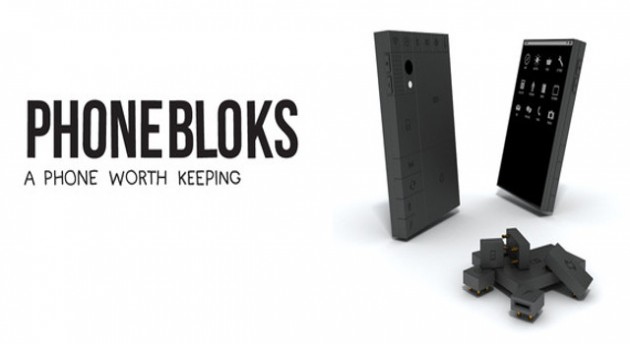
  • Phonebloks is a really nice idea… but it won’t work :’-(

    Phonebloks is a concept mobile phone that has taken social networks by storm in the past few days. Conceived by Dutch designer Dave Hakkens, it is meant as a solution to the e-waste problem generated by a smartphone industry which has shipped more than 225 million units in the last few months alone.

    It sounds like an excellent, exciting new idea and it certainly has generated a lot of buzz on the interwebs (every single designer friend I have has posted something related on facebook), but unfortunately the bottom line is: it WOULDN’T WORK :’-(

    (more…)

  • Google’s Project Glass: Interesting concept with a LOOOT of work ahead of it

    Google just released a video for Project Glass, one of their Google[x] projects dealing with augmented reality deployed through a set of glasses (or a similarly placed gear).

    Some have been quick to pinpoint some of the technical problems faced by the project, but of course, we should take the video with a pinch of salt, as it is but a concept design to illustrate what their vision is with the whole thing.

    What I really find interesting about it, is that Google is thinking of a true Augmented Reality application. Forget about the bullshit, gimmicky AR applications in which you must point something to a camera and see a 3D model being put in it’s place while you watch yourself on a screen, what we are talking about here is more akin to Layar, but then without the awkward interaction of having to see things through a small “window” (your mobile device), instead you get to see everything in your own field of view. (more…)

  • 360 UI & Interaction Trend Report… this baby is finally done!

    Finally! After a good couple of months of research and analysis, our UI+Interaction Trend Report ’10-’11 is finally finished and ready for our clients to take advantage of it.

    The borders between purely physical products and the digital world are becoming increasingly blurred. Over the last 40 years, with the price and size of components steadily dropping and microprocessor capabilities constantly increasing, products have the potential of becoming more and more intelligent. This translates into new, exciting features for the users, but it also poses challenges for designers on how to manage the added complexity through an easy to use and efficient interface that allows smart products to fulfill their promise of making life a little easier and more pleasurable.

    We at VanBerlo, believe that a proper understanding of the present and  future of people’s interaction with products will create great new possibilities in the world of design and therefore, as part of my work at one of Europe’s leading design studios, I had the responsibility to develop our very first trend report focusing on the world of interaction and user interface design.

    These award winning trend reports are part of VanBerlo’s  360 creative services offer and they focus on providing up to date, global and detailed insights into the relevant trends in product development.

    As a special treat, here’s a sneak preview of some of the content you’ll find in our full, 160 pages long report (including high resolution photos and HD videos) . (more…)
  • RepRap: Be fruitful and multiply!

    “And God blessed them, and God said unto them, Be fruitful, and  multiply, and replenish the earth, and subdue it: and have dominion over  the fish of the sea, and over the fowl of the air, and over every living  thing that moveth upon the earth”

    Genesis 1:28

    I’m not a religious person at all, but this quote from Genesis illustrates very nicely the awesome powers that were bestowed by “the dude upstairs” upon that couple of naked people living in his garden: Usefulness and Self reproduction!

    This gave way to the opportunity to get more of these  naked people to walk around, do some cool things which could help themselves and others and eventually create some more naked people of their own to keep the ball rolling.

    Well this amazing power is exactly what the guys behind the RepRap project gave to their open source rapid prototyping machine. That’s right, it’s a SELF REPLICATING RAPID PROTOTYPING MACHINE! it creates useful things for us and has the ability to create a copy of itself so that others can take advantage of it too. How awesome is that?? (more…)

  • Sustainable packaging? Bring out the popcorn!

    Another way of 'recycling' packing peanuts?

    For my first post of the year I received the inspiration from a Christmas present my sister received while I was visiting her.

    I’ve always had the habit of keeping the little styrofoam packing peanuts of any package I receive so that I can reuse them whenever I have to send something out myself. It saves me money and I ensure that the material is used at least once more. Sadly though, I’m sure that this is not something that everybody does and undoubtedly most of these peanuts end up in the trash after a single use, contributing to our waste problems.

    But what’s the alternative? Well, as I mentioned, my sister received this gift during the holidays which I thought was brilliantly simple and a very nicely thought alternative. It was a little box with shower and bath soaps which used POPCORN (!!!) instead of styrofoam. (more…)

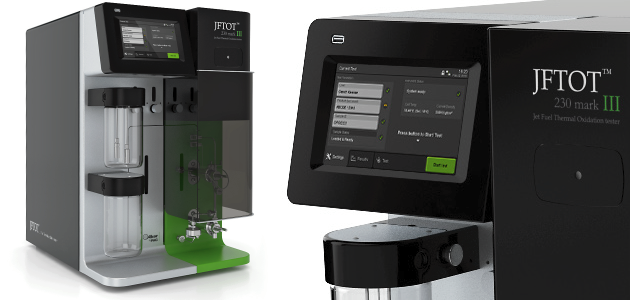
  • JFTOT: User experience design for a family of industrial lab equipment

    PAC

    Relevant keywords

    Laboratory instruments, User interface harmonization, GIO Award 2013, American Good Design Award 2013

    Design goal

    PAC commissioned VanBerlo with the task of performing a portfolio-wide harmonization of their user interfaces, based on the design and styling developed during a previous project. This harmonization was to be started with the design of JFTOT, the newest addition to their growing family of industrial lab equipment.

    Specific role & contribution

    • Project planning and management, including preparation of quotes and direct communication with client
    • On-site visits and direct communication with developers
    • Initial analysis of the benefits of a UI harmonization
    • Conceptualization and wire-framing for JFTOT’s UI
    GIO2013GoodDesign

    (more…)

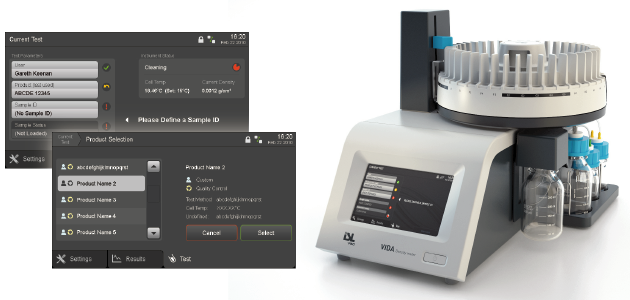
  • VIDA Density Meter: UX design for industrial lab equipment

    PAC

    Relevant keywords

    Laboratory instruments, user interface design

    Design goal

    A more user friendly interface was required as part of the latest version of the VIDA density meter, in order to support the less experienced users that PAC is targeting with the new design of the equipment.

    Specific role & contribution

    • Project planning and management, including preparation of quotes and direct communication with client
    • On-site visits and direct communication with developers
    • Conceptualization and wire-framing
    • Overseeing of styling activities

    (more…)

  • Symposium Advanced Automotive Design at the TU Delft

    Last Friday (Sept. 25th), I attended the Symposium Advanced Automotive Design organized at the TU Delft as part of the celebrations of the 40th anniversary of the Industrial Design Faculty. It was a very nice event in which top designers from the automotive industry (all of them TU Delft alumni) shared a bit of their work and experience as designers for these well known firms as well as giving us their view of the future of automotive design.

    [iframe src=”http://player.vimeo.com/hubnut/album/1551961?color=44bbff&background=000000&slideshow=0&video_title=1&video_byline=1″ width=”630″ height=”354″ frameborder=”0″ webkitAllowFullScreen mozallowfullscreen allowFullScreen]

    The keynote speakers were Fedde Talsma (Exterior Chief Designer at Volvo), Adrian van Hooydonk (Design Director at BMW) and Lowie Vermeersch (Design Director at Pininfarina) who were asked to choose a fragment of a movie as introduction to their talk. We also enjoyed shorter presentations by other TU Delft designers working for Ducati, Alfa-Romeo, DAF, Mercedes and Audi. (more…)

  • Developing a tool to assess emotions elicited by services – MSc. graduation presentation (Video & Pics)

    [iframe src=”//player.vimeo.com/video/12315079?byline=0″ width=”630″ height=”394″ frameborder=”0″ webkitallowfullscreen mozallowfullscreen allowfullscreen]

    So… it’s been a little over a week since I did the presentation for my Design for Interaction MSc. graduation project (Developing a tool to assess emotions elicited by services), and since I went off on a short one week vacation right after that, I didn’t have the time to post the video and some photos of the presentation during that time.

    But as I promised some people, today I finally got back and had some spare time to upload everything. So above,you can take a look at the video of the presentation (takes about 45 minutes including the questions round). The file is quite big (around 500 Mb) because I couldn’t (more…)

  • The delivery of the future: From A to Green

    gcombi_complete

    I’ve been quite busy the last few weeks working on my MSc. graduation project, and so I haven’t had much time to do any new updates here, but since a while ago I found out that one of the projects I worked on had been published on the website of the European Commission for Transport, I figured that was worth a mention.

    As I’ve showed in previous posts, I worked together with a group of colleagues in a project developing a new concept for delivery trucks of the future. My posts were focusing mainly on the application of the Vision in Product Design approach (ViP), which was just but a part of the project.

    Later in the process, this vision and future product which we had designed was translated into a product that could be introduced to the market in the near future and it had a strong relation to the Civitas initiative sponsored by the European Union (more…)

  • The delivery of the future (PART VI) – An example of Vision in Product Design (ViP) being used

    vip_designing_product_levelHere’s the sixth and final post of the ongoing series explaining the Vision in Product Design (ViP) process. It includes some very nice illustrations of the delivery truck we designed for the future.

    PART 6:

    DESIGNING – THE PRODUCT LEVEL

    Once you reach the product level once again, you use the information from all the previous phases of ViP, specially the vision which you created, and the interaction qualities you intend to have with your product, and you finally start designing the product (or service) itself.

    This is probably the phase of the process which will be closest to home to designers, as here’s where you start giving shape to the cloud of ideas that have been generated so far, and you finally (more…)

  • “World Builder”: Minority Report, eat your heart out!

    Some one sent me a link to this very beautiful short movie, which shows some awesome holographic interfaces, and I just had to share it here. Not much more to say, but WATCH IT! it will certainly be worth the 9 minutes of your time.


    World Builder from Bruce Branit on Vimeo.

  • The delivery of the future (PART V) – An example of Vision in Product Design (ViP) being used

    vip_designing_interaction_levelWith my MSc. graduation project now in full swing, I havent had much time to dedicate to posting things, but I figured that this could be a nice way of clearing my mind, so today I’ll continue with the ongoing series of posts explaining the Vision in Product Design (ViP) process.

    PART 5:

    DESIGNING – THE INTERACTION LEVEL

    By following the ViP methodology, the next step in our process was to think about the interaction level in the future context. In this new step the idea is to identify a number of interaction qualities which are relevant in our attempt to achieve the vision that we conceived in the previous phase, but without thinking of any particular product yet.

    These qualities of interaction will be of great importance for the (more…)

  • From A to Green: A future vision of sustainable coachworks

    g-combi_thumb

    Relevant Keywords:

    Automotive industry, sustainability, Transportation, Delivery, Coachworks, Future scenario

    Design Goal:

    Combigroep Carrosserieën, a Dutch coachworks producer, wants to extend its potential market following the newest regulations, transportation trends and logistics of the European Union having sustainability as a focus. As a group of 6 interdisciplinary designers the project was carried out from the strategy up to the product interaction and product detail level.

    Project duration and team:

    300 hours, 2 Strategic product designers (Stefanus Heru Prabowo, Ricardo Mejia), 3 Integral product designers (Barth Vrijling, Ana Laura Rodrigues Santos, Marjolein van Houten), 1 Interaction designer (David Güiza Caicedo).

    Methods Used:

    • Vision in Product Design (ViP) was used as a design framework throughout the whole project
    • The context of the industry and our clients position within it was researched and analyzed through stakeholder analysis, competitor analysis and PESTE analysis
    • Interviews and role playing user analysis were used to understand our users and personas were used to illustrate them during the design process.
    • Generated future scenarios
    • Creative sessions were performed to generate ideas during the design process.

    (more…)

  • The delivery of the future (PART IV) – An example of Vision in Product Design (ViP) being used

    vip_designing_context_levelToday is freezing outside and there isn’t the slightest chance that I’m going out there… so in the meantime I figured I can continue with the Vision in Product Design (ViP) example I’ve been writing about lately.

    This is quite a lenghty post, so let’s just jump straight to the point.

    PART 4:

    DESIGNING – THE CONTEXT LEVEL

    At this point, we’ve already reached the designing phase of the process, and we start by defining the future context.

    DRIVING FACTORS FOR THE FUTURE

    Within the VIP process the use of factors is intended to assist the deconstruction of the present world context in order to map probable and predictable features/aspects on a projected future.

    Factors can be divided in four distinctive (more…)

  • The delivery of the future (PART III) – An example of Vision in Product Design (ViP) being used

    vip_deconstruction_context_levelWell, a new year is upon us and so I thought I should make some time free to post the next step of the on going example of applying the Vision in Product Design (ViP) process.

    So here it is…

    PART 3:
    DECONSTRUCTION – THE CONTEXT LEVEL

    The aim of deconstruction at the context level is to try and think about what factors in the original conditions that a product was created for provided a possible reason to produce that particular person product interaction. (Lloyd, Hekker, & van Dijk, 2006) One of the most important parts of this deconstruction consists in the “context analysis” that provides key information to understand the system and the product itself.

    When designers are developing products that function in complex situations, they (more…)