Category: Interaction Design

  • Why does Apple think that a stylus is a design flaw?

    “It’s like we said on the iPad, if you see a stylus, they blew it.”

    Steven P. Jobs – CEO, Apple Inc.

    I wonder why is it that Apple considers the use of a stylus as a design flaw?

    I understand where Steve is coming from and as an interaction designer I agree that a touch interface should NOT depend on the accuracy offered by a stylus to be usable, but c’mon! (more…)

  • What are tangible user interfaces?

    During the last few days, I’ve been doing a lot of internet surfing at the office in search for good examples of trends in user interface (UI) design for one of our award winning 360 Trend Reports.

    On it’s on, that is already quite a daunting task, as there are so many things out there that it’s difficult to pick and filter everything out. To top it off, there seem to be a lot of overlapping terms to define different types of interfaces which doesn’t make it any easier when you try to organize and classify them.

    But anyway, going straight to the point, one of the most interesting user interface paradigms I’ve come across not only during my search but also during my studies, is the Tangible User Interface (TUI), so I decided to dedicate this post to explaining what they are and to show a few great examples of (soon to be) products which make use of this type of interaction.

    To start up, here’s my definition:

    A tangible user interface is one in which the user interacts with a digital system through the manipulation of physical objects linked to and directly representing a quality of said system.

    The idea with TUIs is to have a direct link between the system and the way you control it through physical manipulations by having an underlying meaning or direct relationship which connects the physical manipulations to the behaviours which they trigger on the system. (more…)

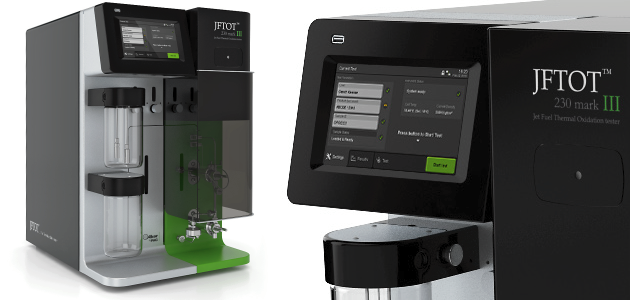
  • JFTOT: User experience design for a family of industrial lab equipment

    PAC

    Relevant keywords

    Laboratory instruments, User interface harmonization, GIO Award 2013, American Good Design Award 2013

    Design goal

    PAC commissioned VanBerlo with the task of performing a portfolio-wide harmonization of their user interfaces, based on the design and styling developed during a previous project. This harmonization was to be started with the design of JFTOT, the newest addition to their growing family of industrial lab equipment.

    Specific role & contribution

    • Project planning and management, including preparation of quotes and direct communication with client
    • On-site visits and direct communication with developers
    • Initial analysis of the benefits of a UI harmonization
    • Conceptualization and wire-framing for JFTOT’s UI
    GIO2013GoodDesign

    (more…)

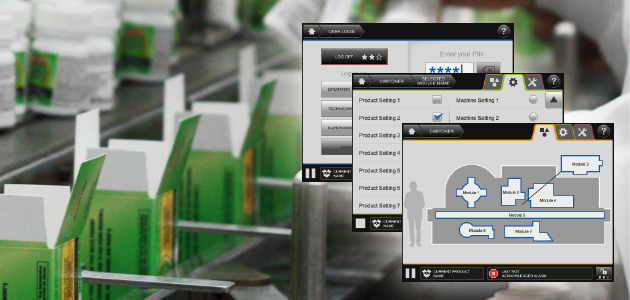
  • Langen: Creating UX guidelines for industrial packaging machines

    Relevant keywords

    Industrial machinery, User interface guidelines, Packaging

    Design goal

    In an effort to bring together the user interface developments of both its European and American branches, Langen Group commissioned VanBerlo to develop a new set of harmonized UI guidelines for its products.

    Specific role & contribution

    • Project planning and management, including preparation of quotes and direct communication with client
    • Organized on-site visits and workshops with the client for an in-depth analysis of the product
    • Responsible for all conceptualization and styling activities
    • Direct communication with developers and support during production phase

    (more…)

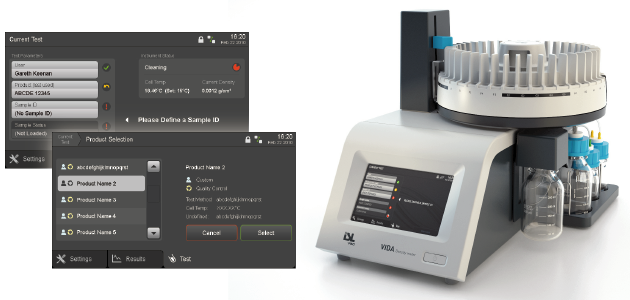
  • VIDA Density Meter: UX design for industrial lab equipment

    PAC

    Relevant keywords

    Laboratory instruments, user interface design

    Design goal

    A more user friendly interface was required as part of the latest version of the VIDA density meter, in order to support the less experienced users that PAC is targeting with the new design of the equipment.

    Specific role & contribution

    • Project planning and management, including preparation of quotes and direct communication with client
    • On-site visits and direct communication with developers
    • Conceptualization and wire-framing
    • Overseeing of styling activities

    (more…)

  • TEN: 10 years of Design & Emotion (Workshop Part II)

    TEN workshopA while back I wrote about the workshop organized by the Design & Emotion Society to celebrate their ten year anniversary, and I said I would make a second post explaining the rest of the workshop and the results… well, after finally making some time to sit down and go through it, here it is!

    If you haven’t read the first part, I suggest you do so here, because that will make the coming lines much more clear to understand.

    so, here it goes…. (more…)

  • Differentiating emotional hotel experiences (EuroCHRIE 2009)

    EuroCHRIE 2009I’m finally back home after attending the EuroCHRIE 2009 conference in Helsinki for a few days, and I have to say that it was quite an interesting experience for me, since it was not really in my professional field as a designer, but it did have to do with what I’ve been working on for the past few months first as part of my MSc. graduation project and now as an interaction designer/researcher for SusaGroup.

    The conference dealt with experiences in the hospitality and tourism industry and I was actually there presenting a working paper which came from a small exploratory study I conducted at the early stages of my graduation project with the aim to identify what type of emotions people felt the most in a hotel environment and towards what exactly. (more…)

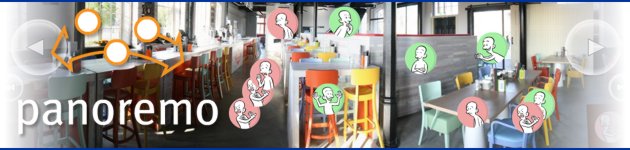
  • Panoremo: A tool to assess the emotional experience of environments

    Panoremo_thumb

    Relevant Keywords:

    Evaluating emotions, environments, services, consumer experience, online application, prototyping

    Design Goal:

    During my Design for Interaction MSc. graduation project a concept was developed that was deemed very interesting and promising for the potential assessment of emotions experienced towards a physical environment. This concept was later developed even further in collaboration with SusaGroup in order to bring it into the market as a fully functional instrument that can aid in emotional design research.

    Methods Used:

    • Early prototyping to perform user testing of working principle.
    • Software development.
    • Usability testing.

    (more…)

  • TEN: 10 years of Design & Emotion (Workshop Part I)

    TEN workshopThe Design & Emotion Society is celebrating this year their 10th anniversary and they decided to organize an event at the Delft University of Technology to commemorate this milestone.

    “TEN – 10 years of design and emotion” was a one day workshop held at the faculty of Industrial Design Engineering on the 28th of August and luckily I was there to participate. In this post I’ll explain what the workshop was all about and I’ll give a brief explanation of what we did in the first half of the activity. In a later post, I’ll show some of the results that were obtained at the end of the day. (more…)

  • emoments: Developing a tool to assess emotions elicited by services

    emoments_thumb

    Relevant Keywords:

    MSc. Graduation project, evaluating emotions, services, consumer experience, hotels, mobile application, prototyping

    Design Goal:

    Various methods are available for measuring emotional responses elicited by products (design) or human-product interaction. Up to this point however, no instrument was available that could be used to assess emotional service experiences. The aim of the project was to extend the possibilities of assessing emotions to the realm of experiential service design. As a case study for the project, the focus was laid on the `hotel experience’, that is, the experience of a guest while staying at a hotel.

    Project duration:

    5 months (full time)

    Methods Used:

    • Thorough literature research to become acquainted with the project domain.
    • Online survey to identify the most common types of emotions experienced by hotel guests and the stimuli associated with these experiences.
    • Creative session organized with a panel of users and designers to generate ideas.
    • Early prototyping to perform user testing of concepts.
    • Creation of wire-frames and navigation flow-charts to define the software’s architecture.
    • Hi-Fi prototyping of final concept.
    • Usability testing.

    (more…)

  • Measuring and evaluating emotions towards physical spaces

    emotional_space1Well, it’s kind’a cool at the deep end of the pool. Two months into my current status as a Master of Science I’m having lots of fun working on a temporary basis (let’s hope that changes soon) with the good people at Susa Group, the company that I worked for during my graduation project.

    And it’s lots of fun because I’m doing something which I really enjoy, and we are working on transforming one of the concepts I developed during graduation into a fully working and marketable tool which hopefully people will be using in a very, very near future.

    It’s still a work in progress, but the idea is to develop a tool that can help in measuring and evaluating emotions towards  physical spaces. This opens up the door to a plethora of possibilities and applications: evaluating an urban environment to know how people feel about their surroundings (emotions in architecture and urbanism), finding out how people feel about that new interior design that you are developing for a new store (emotions in retail design) or identifying the critical emotional points of a restaurant or of a hotel lobby (emotions in experiential services) are but a few of the examples I can think of. (more…)

  • Developing a tool to assess emotions elicited by services – MSc. graduation presentation (Video & Pics)

    [iframe src=”//player.vimeo.com/video/12315079?byline=0″ width=”630″ height=”394″ frameborder=”0″ webkitallowfullscreen mozallowfullscreen allowfullscreen]

    So… it’s been a little over a week since I did the presentation for my Design for Interaction MSc. graduation project (Developing a tool to assess emotions elicited by services), and since I went off on a short one week vacation right after that, I didn’t have the time to post the video and some photos of the presentation during that time.

    But as I promised some people, today I finally got back and had some spare time to upload everything. So above,you can take a look at the video of the presentation (takes about 45 minutes including the questions round). The file is quite big (around 500 Mb) because I couldn’t (more…)

  • Developing a tool to assess emotions elicited by services

    graduation-presentation-david-guiza-caicedoHi everyone!

    well, it’s almost here… on the 26th of June I will be giving the presentation for my Design for Interaction MSc. graduation project and I’d like to invite anyone interested in the subject to come along to the presentation.

    It will be held at 3:45 pm at the faculty of Mechanical, Maritime & Materials Engineering (Mekelweg 2, 2628 CD Delft) of the TU Delft, in Room F.

    In the mean time, wish me luck finishing up the project!

  • Ready, set, GREEN!

    green_lanternLast Thursday I finally received the green light from my graduation supervisory team, which in fact means that they are confident that I will be able to finish up my MSc. graduation project within the coming 6 weeks and that no matter what, on the 26th of June somewhere in the afternoon, I will finally be leaving my eternal student status behind to officially adopt my new role as a jobless professional with a Master’s degree (albeit, hopefully for not too long).

    So anyway, if there are people out there in the Netherlands (or the vicinity) who are interested in the project (“Developing a tool to assess emotions elicited by services”), I will be performing a public presentation of the project on the 26th of June, at the Delft Univeristy of Technology. More details regarding location and time will come shortly.

  • Experiential Services: My two cents to understanding them

    sb10069519ag-001I’ve been so busy with my MSc. graduation project that I left this blog completely unattended. Today, I decided that it was time to do something about that, and what better way than to post something related to the project itself.

    My project is titled “Developing a tool to assess emotions elicited by services”, and as such I figured that the first step on the road was to do a bit of research and try to find out what exactly was meant by services, and more especifically experiential services.

    But what the hell are experiential services??? well, here are my two cents to try and understand this concept better.

    First of all, a little background info:

    A shift towards an “experience” economy

    For centuries, the agrarian economy was based on Commodities (products grown, or extracted from the land), but in the wake of the industrial revolution Goods (manufactured or processed products) became the predominant (more…)

  • The delivery of the future (PART VI) – An example of Vision in Product Design (ViP) being used

    vip_designing_product_levelHere’s the sixth and final post of the ongoing series explaining the Vision in Product Design (ViP) process. It includes some very nice illustrations of the delivery truck we designed for the future.

    PART 6:

    DESIGNING – THE PRODUCT LEVEL

    Once you reach the product level once again, you use the information from all the previous phases of ViP, specially the vision which you created, and the interaction qualities you intend to have with your product, and you finally start designing the product (or service) itself.

    This is probably the phase of the process which will be closest to home to designers, as here’s where you start giving shape to the cloud of ideas that have been generated so far, and you finally (more…)